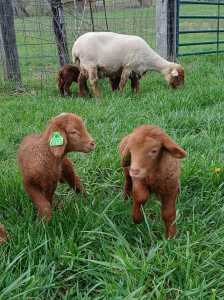
As Tarheelbilly Farm reaches the 10 year mark here in Ohio, I’ve been reflecting on how far the flock and farm have come since we left our microfarm in NC and moved onto our Appalachian homestead.
The oldest ewe in the flock turned 10 this year and gave birth to a healthy 10 lb 2 ounce ewe lamb. She was exposed to a ram for 10 days and settled, a testament to the longevity and vigor we have worked hard to promote in the flock.
I often receive inquiries about breeding stock from those looking to start their own Tunis flocks. Most have never owned sheep and are looking for small ruminants to provide milk, meat, and fiber for their tables. Some are commercial breeders or dairies looking to add Tunis genetics to their existing operations. Tunis add parasite resistance and hardiness as well as hybrid vigor in crossbreed programs.
Buyers have good questions about the flock, and I’m always happy to answer them. I always suggest that people new to sheep do a lot of research before deciding to add them to their homesteads. Sheep have very specific fencing, nutrition, and fiber needs that a new shepherd will need to be on top of in order to be successful.
One will have to learn A LOT about grazing and pasture management. Establishing goals and having good systems in place will make it easier to focus on learning about and enjoying the sheep. Knowing your “why” will dictate a lot of the “how.”
For me, raising the flock on grass is non-negotiable. Good mothering is important. I do not keep bad mothers in the flock– sheep that lamb on pasture and take care of their babies are worth their weight! They teach their babies how to forage and where to go when it’s time to move paddocks. They also raise babies that grow quickly on grass. Those qualities are important.
What sets your flock apart from others? My flock was built on from genetics from other Tunis breeders committed to raising their flocks on grass and few inputs. One breeder raised Tunis for over 20 years on grass, and selected for parasite resistance. Her flock was in the USDA export program for many years. I was fortunate to purchase a ram from her before she retired, and several members of the flock carry genetics from the ram I bought from her. Another breeder was well know in the Tunis world and her genetics still heavily influence many Tunis flocks in the South. The oldest ewe in the flock– the one I mentioned earlier– is from her flock, and nearly every sheep on the farm has genetics from her farm in some way. I have built on the base of these giants, with the goals of improving performance on grass, consistent multiple births that are raised by their mothers, and good fleece production.
The flock lives 100% on pasture and is accustomed to various fencing systems. A combination of woven wire, electric nets, and poly reels make up the rotational grazing system. Our sheep stay put and don’t challenge fences. Those that do, don’t stay around very long.
Tarheelbilly Farm sheep grow well on grass. How do I know? Well, numbers tell a great deal of the story. Each lamb is weighed at birth and again at weaning. Performance is measured. Sheep are observed daily. They are evaluated for how they behave in our environment. Some stay to grow the flock, some become lamb. Good stock that would otherwise stay go on to other farms as breeding stock. Those who don’t quite fit in go to the market. I don’t sell culls as breeding stock, and prefer to sell a twin ewe if I retain one, or ewes from yearlings that I know I will have the opportunity to breed again.
I

