Fostering connections between the animals, the land, and ourselves has always been a central guiding principle for us at Tarheelbilly Farms. When we started our microfarm back in 2008 on our half acre in NC, it was important to us to farm without chemicals and to generate as little waste as we could. We kept our money local, purchasing feed for our goats and chickens from our local feed mill, our bees and supplies from other beekeepers in our local community, and our seeds from our locally owned hardware stores. It has always been important to support our friends and neighbors in their endavors as much as we could.
That didn’t change when we moved to our Southern Ohio farm. We still purchase our chicken/hog feed from our local mill (less than 2 miles from our farm!). We still farm without chemicals/pesticides/additives. We still support our friends and neighbors as much as we can before we source things from large companies.
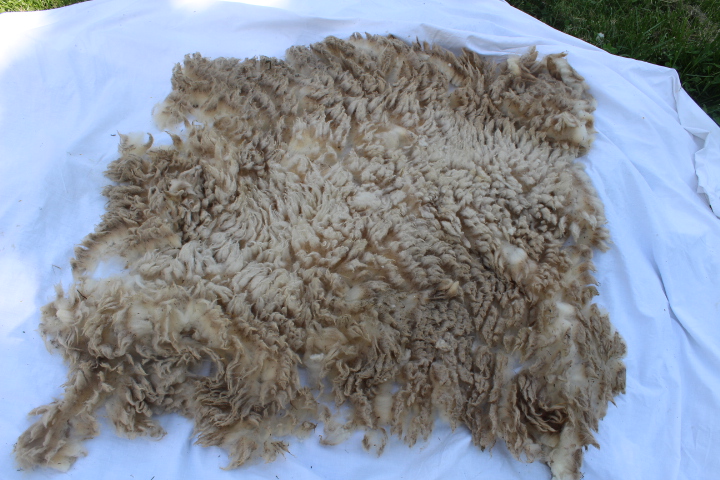
Another part of our mission was to NOT be wasteful! Farms generate a LOT of waste, and fiber production is no different. Every spring, I shear each member of the flock. During this process, I skirt/remove the belly wool, super dirty bits, and any part of the fleece that is considered “unusable.” The prime wool is sent to various mills to be processed into roving or yarn.
For a few years, I would use this wool as much around my plants in the garden. Recently, I came across an article about recyling waste wool into wool pellts that could be used in garden! After a bit of research, I found a mill and mailed a few pounds of waste fiber to them. A sizable box of pellets returned to me and I am now happy to offer this product to our community. Using the whole fleece is very much in keeping with our goal of being a low-impact farm, and purchasing them for your plants is a step in supporting sustainability practices.

Made solely from our flock’s wool, these pellets are a natural slow-release soil amendment. As they break down, wool pellets naturally aerate soil, promoting better root health, as well as retain moisture, reducing the watering needs by 25 percent.
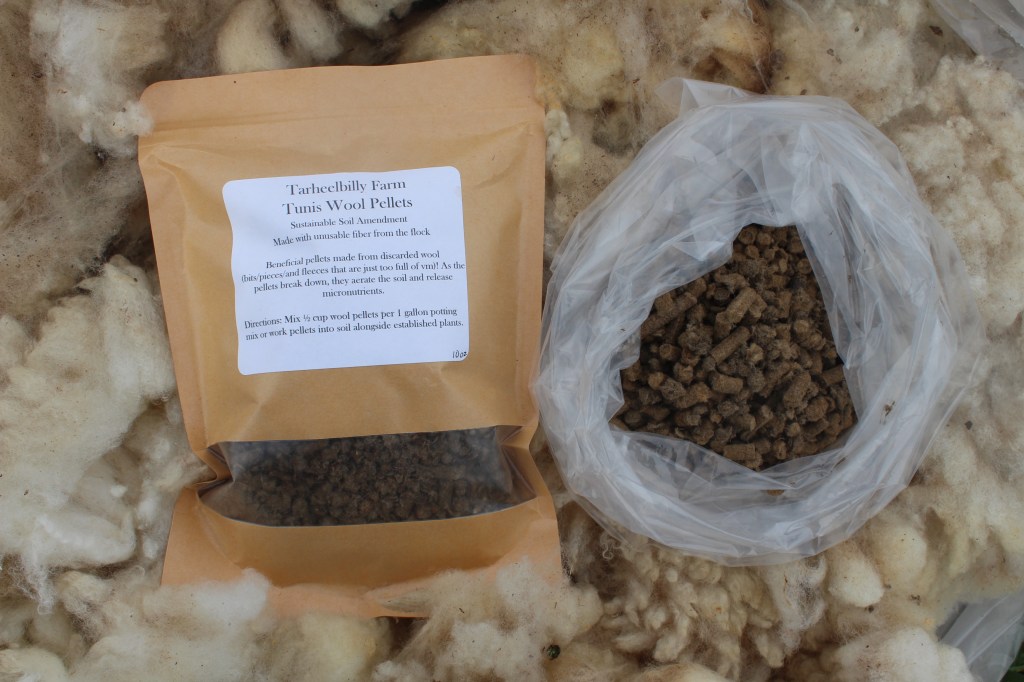
Incorporate pellets into the soil around plants or seeds to improve soil structure and provide long-lasting nutrition. Use them in containers, pots, or around plants in the garden to enhance moisture retention. They will add a bit of fertility as they break down, but they have not been tested by a lab to determine N-P-K amounts.
I am really looking forward to using them in my garden next spring. In the meantime, if you would like to purchase a bag to try, they are in the Etsy shop. Each bag is 10 ounces. Here’s the direct link:
https://www.etsy.com/listing/1837705855/tunis-wool-pellets
For more information about wool pellets and how they can help with organic vegetable production, feel free to check out the following articles:
https://extension.sdstate.edu/wool-natural-bio-enhancement-gardens
-Charis







 Tarheelbilly Farm